

Delhi has taken a fresh step toward cleaner and smarter transportation with the launch of hydrogen-powered shuttle buses in the Central Vista area. The new initiative by Delhi Metro Rail Corporation (DMRC) is not just another transport project – it signals a bigger shift toward green mobility in India.
For years, Delhi has struggled with traffic congestion and rising pollution levels. Now, hydrogen buses may become part of the solution.
Starting May 15, 2026, commuters travelling near major government offices in Central Vista can use these eco-friendly shuttle buses for daily travel.
Why Hydrogen Buses Matter for Delhi
Unlike traditional diesel buses, hydrogen-powered buses release far fewer harmful emissions. This makes them cleaner for the environment and better for public health.
Experts believe hydrogen fuel could become one of the most important clean energy options for public transport in the future.
The new buses launched under the Hydrogen Buses in Delhi project represent India’s growing interest in alternative fuel technology.
At a time when fuel prices and global energy concerns continue to rise, many governments are now searching for cleaner and more sustainable transport solutions.
What Makes These Buses Different?
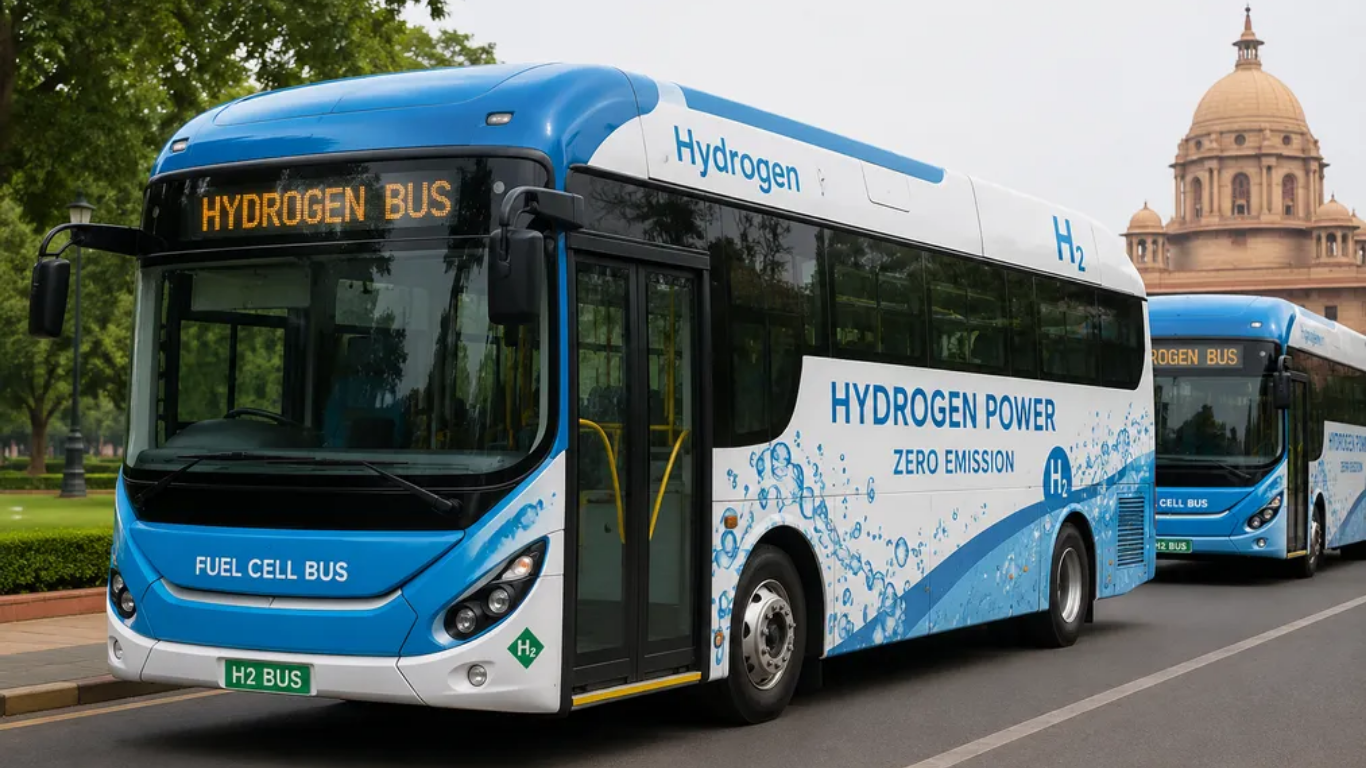
The hydrogen buses introduced by DMRC come with several modern features designed for passenger comfort and safety.
Each bus offers:
- Seating capacity for 35 passengers
- GPS-based live tracking
- CCTV security systems
- Real-time route monitoring
Indian Oil Corporation (IOCL) supplied the buses and will also support hydrogen fuel operations for the project.
Meanwhile, DMRC will manage conductors, ticketing, and daily operations.
Hydrogen Buses: Routes, Timing and Ticket Prices
The buses will provide connectivity between Central Secretariat Metro Station and Seva Teerth Metro Station while covering several key government areas.
Important stops include:
- Kartavya Bhawan
- Vigyan Bhawan
- Nirman Bhawan
- Akbar Road
- India Gate
- National Stadium
The buses will operate every 30 minutes during office hours on working days.
Morning Service: 8:30 AM to 12:30 PM
Evening Service: 3:30 PM to 6:30 PM
Passengers can pay through:
- UPI
- National Common Mobility Card
- Cash
Ticket prices remain affordable at ₹10 and ₹15.
India’s Push Toward Green Mobility
The launch of Hydrogen Buses in Delhi also supports India’s larger clean energy goals.
Recently, Narendra Modi encouraged people to reduce fuel consumption and adopt more responsible energy habits amid global energy uncertainty.
Projects like hydrogen buses may help reduce India’s dependence on imported fuel in the long run.
Environmental experts believe such experiments are necessary if Indian cities want to tackle pollution and climate challenges seriously.
Could Hydrogen Buses Expand Across India?
Many people now see this project as a testing ground for future public transport systems.
If the Delhi pilot succeeds, hydrogen-powered buses may eventually appear in other major cities like Mumbai, Bengaluru, Chennai, and Hyderabad.
For daily commuters, this could mean quieter, cleaner, and more sustainable travel in the future.
Readers can also check updates from the Delhi Metro Rail Corporation and Indian Oil Corporation for official route and service details.